

The Advent Spiral opens the four-week journey from late November to Christmas. A spiral of evergreen boughs is laid on the floor in a darkened room, with a single candle burning at the centre. Each child walks slowly inward carrying an apple with an unlit candle, lights it from the central flame, and places the lit apple along the green path on the way out. As more children walk, the spiral fills with light. This guide gives you the spiral ceremony and then the full four-week Advent journey that follows, moving through the kingdoms of nature toward Christmas.
The Spiral Ceremony
In the dim quiet of a late November afternoon, a spiral of evergreen boughs is laid on the floor. At its centre, a single candle burns. One by one, each child walks slowly inward, carrying an apple with an unlit candle pressed into its hollow.
At the centre, the child bends, lights the candle from the steady central flame, and on the slow walk outward places the lit apple somewhere along the green spiral. The next child enters. Then the next.
With each turn, the spiral fills with light, until what began as a single small flame has become a glowing wreath of stars laid on the earth. There is no clapping, no chatter, only the soft sound of footsteps on wood and the breath of the candles. Held in candlelight alone, the Advent Spiral is an experience of pure awe, a child’s first encounter with the holy gesture of receiving and sharing the inner light.
Why It Matters in Waldorf Education
In Waldorf traditions, midwinter is the deepest descent of the soul into matter, the moment when outer light is most withdrawn and the inner light must be kindled. The Advent Spiral makes this gesture visible to a child without a single word of explanation. The child walks inward to the source, receives a flame, and carries it back out into the world. It is an image of incarnation, and an image of every human soul finding its own quiet fire.
Pedagogically, the spiral teaches what no curriculum can: slowness, reverence, and awe. In a culture of bright screens and quick excitement, the homeschool parent offers something else, the dignity of hush. The spiral is one of the most powerful festival images we hold, because it is felt before it is understood, and because it is remembered for life.
For the Southern Hemisphere
Advent in the Southern Hemisphere falls in the weeks of warm summer and long light, which sits uneasily with a festival whose whole body rests on the image of the inner candle in the outer dark. The spiral walk itself, a slow gesture through green into a single flame, belongs to the shortest days of the year. For Southern Hemisphere families, that is the Winter Solstice festival in June, not Advent in December.
Many Southern Hemisphere families therefore keep the Advent Spiral as part of the Winter Solstice celebration: evergreen boughs, a centre flame, the slow procession, the candle-lit apples. What remains of Advent in December is the quieter four-week preparation for Christmas itself, held gently and in a summer mood: an Advent wreath on a shaded table, the weekly kingdom theme (mineral, plant, animal, human), and small daily gestures of kindness. The fuller weekly plans below work well for this, treated as a December family rhythm rather than a candlelit descent into darkness. For the spiral ceremony, see also the Winter Solstice guide.
The Four Weeks of Advent
Advent is a time of deep connection to nature and the world around us. Traditionally, the four weeks leading up to Christmas are celebrated by moving through the four kingdoms of nature, recognising and honouring each one. This rhythm brings a sense of wonder, grounding, and meaning to the season, whether in a classroom, homeschool, or family setting.
Each week of Advent introduces a new theme, building a connection to the natural world and culminating in the warmth of human kindness and giving:
Week One – The Mineral Kingdom. The foundation of all things. This is a time to honour the earth’s stability, the beauty of crystals and rocks, and the grounding presence of the natural world.
Week Two – The Plant Kingdom. The quiet endurance of plants through the seasons reminds us of beauty, patience, and renewal.
Week Three – The Animal Kingdom. Animals teach us about service, care, and companionship. Celebrating their contributions and the wonder of all creatures great and small is important in this third week.
Week Four – The Human Kingdom. The final week brings a focus on love, kindness, and the warmth of human relationships. It is a reminder that we carry the light within us and can share it with the world.
Creating the Advent Space
The Advent Wreath
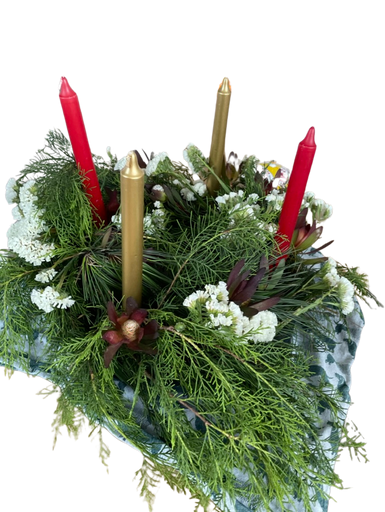
Making a simple Advent wreath out of conifer branches with four candles evenly spaced throughout makes a beautiful centrepiece for your morning circle or dining table. Each Sunday of Advent, the next candle is lit. So, on the first Sunday (and throughout the week that follows) only one candle will be lit; then, from the second Sunday, there will be two, and so on. Branches can be woven into a willow base, or it is possible to buy a florist’s oasis block in a wreath shape, which can then be soaked and branches poked into it.
The Advent Table
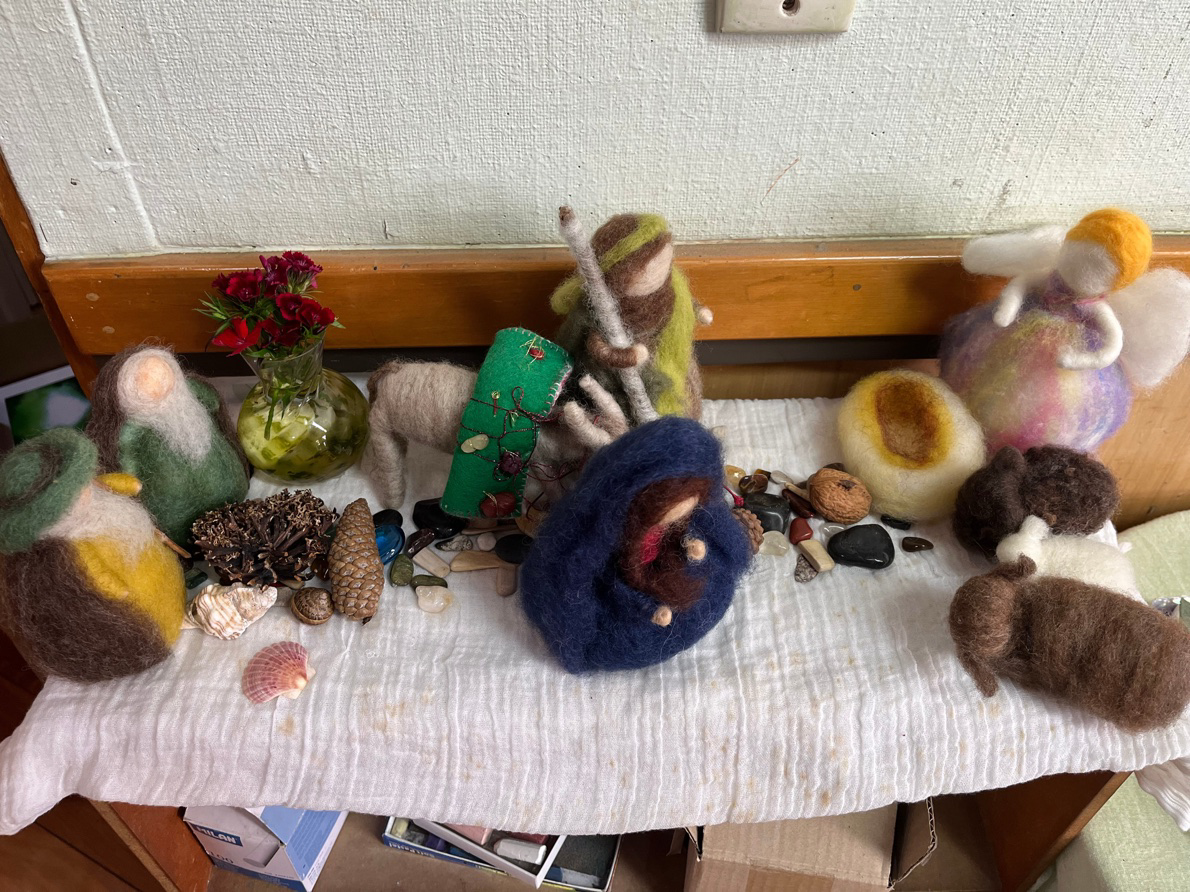
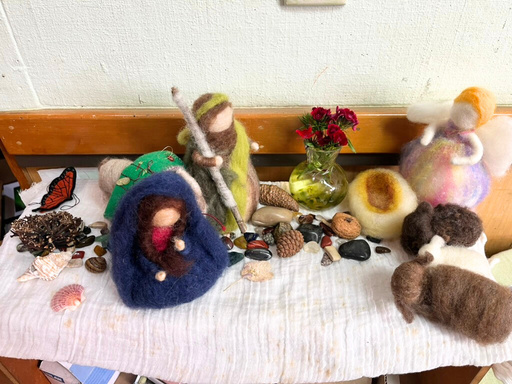
The traditional nativity scene can be broadened to show the stable awaiting Mary and Joseph at one end of a path, with them and the little donkey travelling one or two more steps along it each day. In the first week, collected gems and stones can be laid to make the path. A few little plants and leaves can be added in week two. The animals can appear in the stable in week three, and the shepherds can arrive in week four.
Nativity characters can be bought, or they can be made as a craft activity to do together. Each human and animal can be beautifully needle-felted, sewn, or modelled. Alternatively, rather than showing a nativity scene, you can create a centrepiece of a themed nature table that allows for the addition of themed treasures for each week.
The Advent Calendar
The Waldorf-style advent calendar is unlikely to include store-bought chocolate. Rather, it can be pockets to open each day with a themed treasure of the week, or a calendar made from paper or card with a little image behind each door that can be used as story inspiration.
Week One: The Mineral Kingdom
The first week of Advent celebrates everything to do with the stones, gems, minerals, and stars. Stories for this week can be inspired by this theme. They can either follow the journey of Mary, Joseph, and the Little Donkey along the rocky road to Bethlehem, or they can be more broadly inspired by this celebration of the mineral kingdom.
The Advent table can have a few special gems laid to mark the path, or simply as a collection on your table. Children can be encouraged to find beautiful stones to add throughout the week. Throughout this first week of Advent, you can find moments to draw attention to the mineral kingdom around you. It can be inspiration for nature walks, nature journalling, and play invitations.
Advent Verse (Week One)
The first light of Advent is the light of Stones,
the light that has existence in crystals, shells, and bones.
Craft: God’s Eyes Yarn Stars
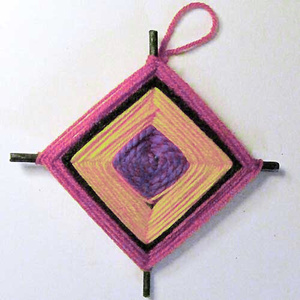
God’s Eye yarn stars are a simple yet beautiful handcraft that encourages focus, patience, and creativity. Traditionally made for protection and blessings, these woven stars symbolise warmth and light during the winter months.
You will need: 2 sticks about 20 cm long (collected from outside or store-bought), coloured yarn, and scissors.
Prepare the sticks. Take the sticks and cross them in the middle to form an "X." Secure the sticks together by wrapping a bit of yarn tightly around the centre a few times.
Begin wrapping the yarn. Choose a yarn colour to start with. Tie the yarn onto one stick close to the centre and begin wrapping it around each stick in a circular motion. Over, around, and across, continue moving outward, creating a star-like pattern as you wrap.
Change colours (optional). To add different colours, cut the yarn and tie on a new piece. Continue wrapping in the same pattern, layering colours.
Finish the star. Once the star is large enough, cut the yarn and tie it securely to the back. Add a small drop of glue to prevent unravelling if needed.
Attach a hanging loop (optional). Cut a small piece of yarn, tie it to one point of the star, and make a loop for hanging.
Craft: Felted Stones
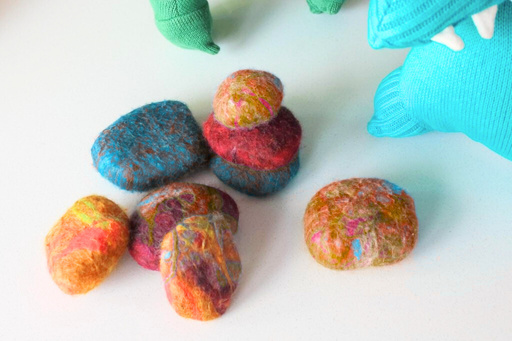
Felted stones make beautiful paperweights, nature table decorations, or handmade gifts.
You will need: smooth, medium-sized stones (river stones work best), wool roving in natural or bright colours, warm water, dish soap or mild wool soap, a bowl or small tub, and a towel.
Prepare the wool. Tear (do not cut) small strips of wool roving. Layer the wool around the stone, covering it completely in thin, overlapping layers. If using multiple colours, layer them to create patterns or blend the edges for a marbled effect.
Start wet felting. Fill a bowl with warm, soapy water. Carefully dip the wrapped stone into the water, making sure it gets wet but not letting the wool slip off. Gently press the wool onto the stone to help it start bonding.
Begin rubbing and shaping. With gentle circular motions, start rubbing the wool-covered stone between your hands. The fibres will start to tighten and shrink, forming a snug felted cover. Continue rubbing, occasionally dipping the stone back into the warm water to keep it soapy.
Full the wool. As the wool begins to felt, apply slightly firmer pressure. Roll the stone between your palms or against a textured surface (like a bamboo mat or bubble wrap) to help the fibres bond. This process may take 5 to 10 minutes until the wool feels firm and smooth.
Rinse and dry. Rinse the felted stone in clean warm water to remove soap. Gently squeeze out excess water (do not twist). Place on a towel to air dry completely. This may take up to 24 hours.
Week Two: The Plant Kingdom
The second week of Advent celebrates the world of plants. Stories for this week can continue to follow the journey of Mary and Joseph through the lens of the plants they encounter, or they can be more broadly inspired by this celebration of the plant kingdom.
The Advent table can have carefully chosen plants added along, such as a small vase of flowers, dried seaweed, cones, dried or pressed flowers, or a little potted plant or cactus. Children can be encouraged to find beautiful flowers and leaves to add throughout the week; nature journalling can focus on plants growing nearby, and play invitations can include dried flowers, leaves, and cones.
Advent Verse (Week Two)
The first light of Advent is the light of Stones,
the light that has existence in crystals, shells, and bones.
The second light of Advent is the light of Plants,
the light that lives and grows, that blossoms and enchants.
Craft: Tissue Paper Roses
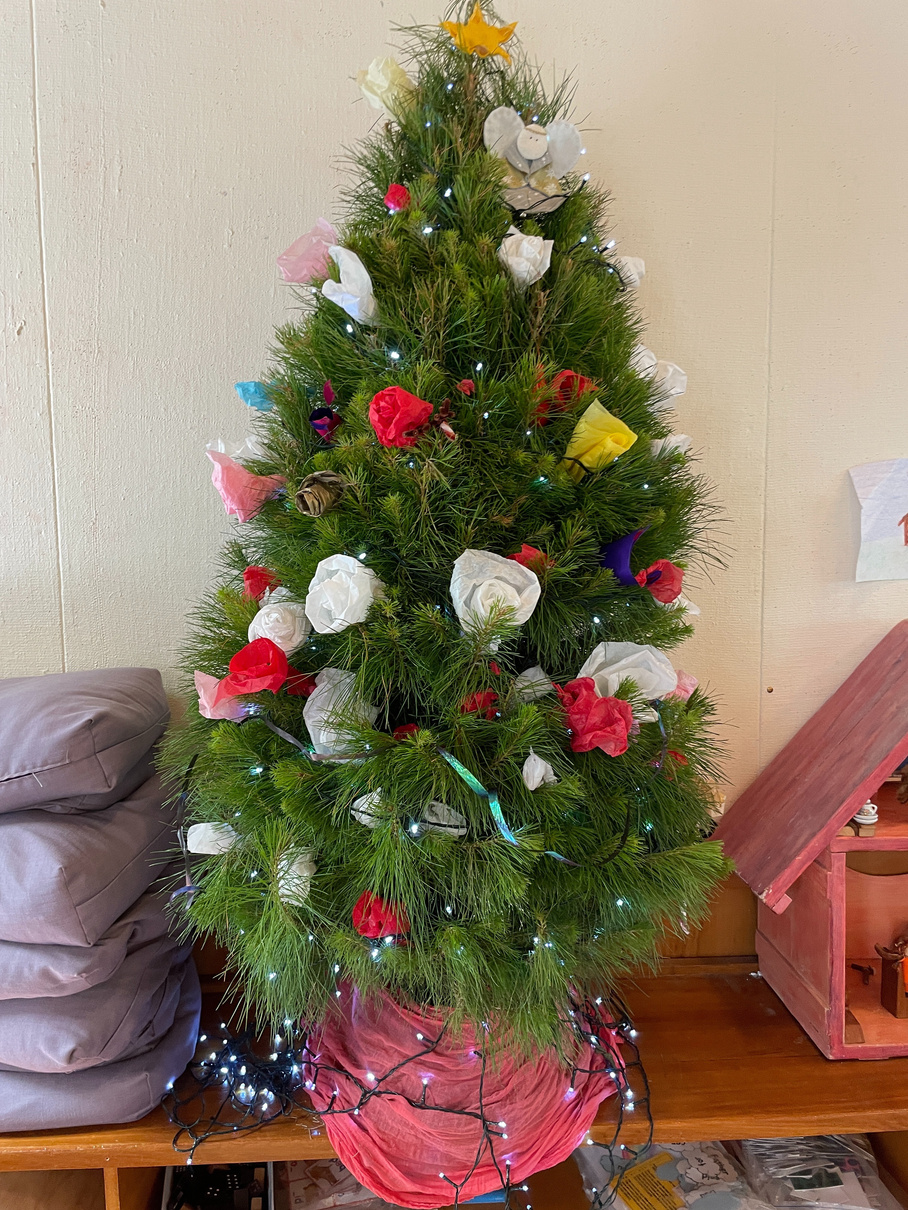
These simple roses can be used as table or Christmas tree decorations. Traditionally, there would be 12 red roses and one white one, for each of the disciples and Jesus; however, they can be enjoyed simply for their natural beauty in as many colours and numbers as you like.
You will need: a selection of tissue paper, cut to approximately A3 size (smaller will work too), and optionally florist’s wire for attaching to the Christmas tree.
Take a piece of tissue paper in one hand. Find the approximate centre point and pinch it there.
Use the other hand to twist and scrunch the paper around the centre point, creating a soft rose form.
Once rolled, use both hands to soften the "petals" and open it out a bit.
Attach a piece of florist’s wire to the base by wrapping it around a few times. This can then be wired onto the Christmas tree, if desired.
Craft: Felted Acorns
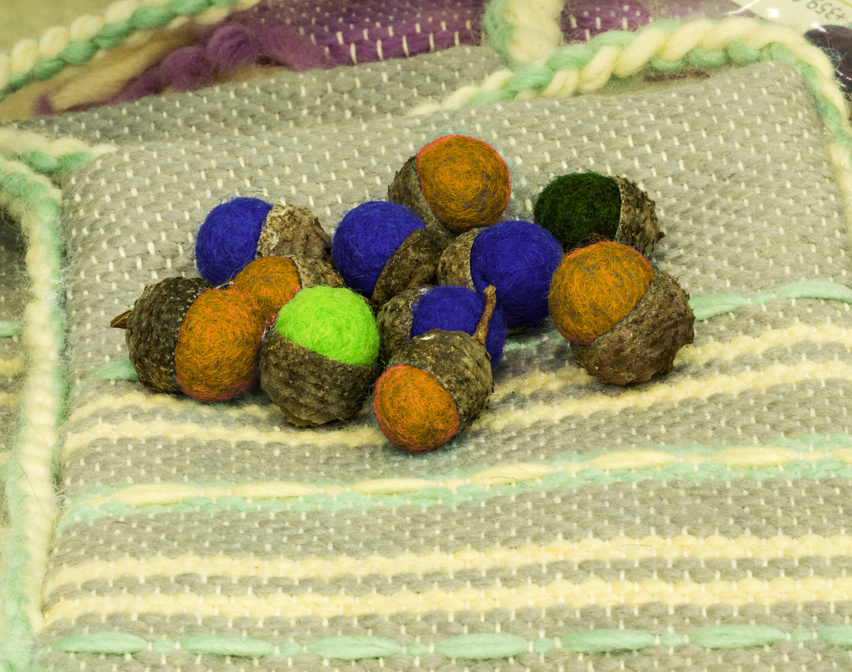
Felted acorns make sweet, tiny decorations, nature table additions, or can be strung together as a garland.
You will need: wool roving, acorn caps (collected from outside and cleaned), warm water, dish soap or mild wool soap, a small bowl, a towel, and glue (hot glue gun or strong craft glue).
Form the wool balls. Take a small piece of wool roving and loosely roll it into a ball about the size of a marble (it will shrink during felting). If needle felting first, gently poke the wool into shape using a felting needle before wet felting (optional but helps keep the shape).
Wet felt the acorns. Fill a bowl with warm, soapy water. Dip the wool ball into the water and start rolling it between your palms. Apply gentle pressure at first, then increase as the wool tightens. Keep dipping into warm water and rolling until the wool hardens into a smooth, firm ball. Rinse under clean water and set aside to dry on a towel (this may take 24 hours).
Attach the acorn caps. Once the felted acorns are fully dry, choose a matching acorn cap for each one. Apply a small amount of glue inside the cap and press the felted acorn firmly inside. Hold in place for a few seconds to ensure it sticks securely.
Week Three: The Animal Kingdom
The third week of Advent celebrates the animal kingdom and all creatures great and small. Stories for this week can continue to follow the journey of Mary and Joseph through the lens of the animals they are helped by on their travels, or they can be more broadly inspired by this celebration of the animal kingdom.
The Advent table can have a few little animals added. If it is a nativity scene, the animals in the stable can appear. Children can be encouraged to find animal treasures throughout the week to add, such as snail shells, birds’ eggs (if the season allows), and butterfly wings.
Advent Verse (Week Three)
The first light of Advent is the light of Stones,
the light that has existence in crystals, shells, and bones.
The second light of Advent is the light of Plants,
the light that lives and grows, that blossoms and enchants.
The third light of Advent is the light of Beasts,
the light that feels and moves, in creatures great and least.
Craft: Needle Felted Sheep
Sheep are an ideal introduction to needle felting, especially if made to lie down with their legs tucked under them. The sheep can be used as toys or nativity table decorations.
You will need: white wool roving (for the body), a felting needle, and a felting mat or sponge.
Create the sheep’s head. Take a length of wool roving about 20 cm long. Loosely knot it in the middle and fold one end back over the top of the knot (this will form the head). Take a tiny strand of loose wool and wrap it underneath the knot (to shape the neck).
Shape the body. Tuck and fold the long pieces of wool below the head until they are a bit more compact. Wrap around them with an extra length of wool if needed. Using a felting needle, stab repeatedly into the wool, turning as you go, until it becomes firm and holds its shape. This may take several minutes.
Shape the head. Gently felt the head into a long triangle shape with the point as the nose. Add in a little more wool if needed. Tease out the ears and felt them into little circles.
Final details. Add a tiny piece of fluffy wool as the tail, and gently felt all over the head and body until all the wool is secure and firm.
Artistic Activity: Nature Journalling
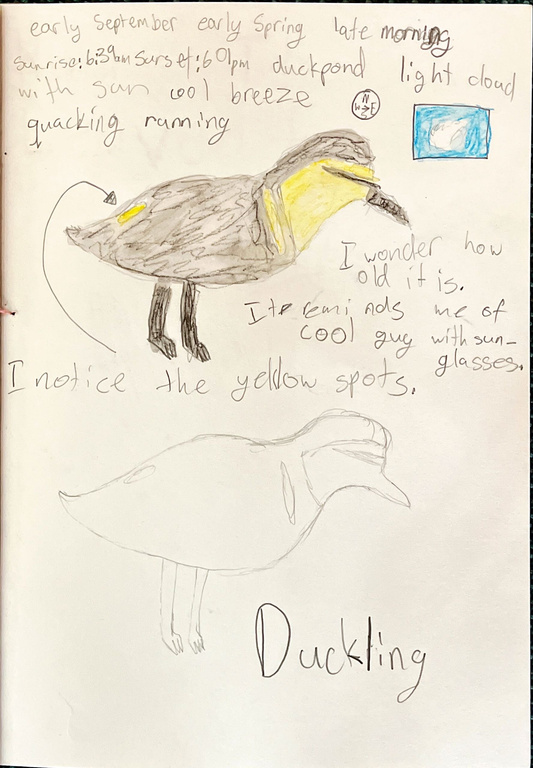
Nature journalling is a wonderful way to observe and connect with the natural world. It encourages children to notice details in local wildlife, develop artistic skills, and record their observations.
You will need: a journal or watercolour paper (sturdy enough for painting), pencils for sketching, watercolour paints and brushes, a fine-tip black pen, and coloured pencils (optional for finer details).
Choose a subject. Go outside to find a local animal, bird, or insect to observe. Take a moment to quietly watch how the creature moves or interacts with its surroundings.
Sketch the form. Lightly sketch the shape of the animal or plant with a pencil, keeping the strokes loose and natural. Look at key details like the shape of the beak, paws, wings, or leaves.
Add watercolour paint. Using light washes, add the first layer of watercolour to fill in the main colours. Let it dry, then add darker shades for shadows and details.
Outline and add details. Once dry, use a fine-tip black pen to lightly outline key features, like eyes, feathers, or fur texture. Add small details with coloured pencils if desired.
Annotate with observations. Add labels and write a short description of what you observed about the creature’s behaviour, habitat, or unique features. Include any seasonal notes.
Week Four: The Human Kingdom
This final week of Advent provides an opportunity to celebrate the gifts of all the kingdoms that have come before, and this week adds the recognition of the light we can offer as human beings.
Stories for this week can follow the journey of Mary and Joseph through to completion or be an opportunity to explore the theme of good human beings in a wider context. The Advent table can have the final human beings added; if it is a nativity scene, the shepherds can appear, slowly approaching Bethlehem with their gifts. Angels can also be made and added if desired. The focus of craft this week can be broadened to things that people will find joy in at Christmas.
Advent Verse (Week Four)
The first light of Advent is the light of Stones,
the light that has existence in crystals, shells, and bones.
The second light of Advent is the light of Plants,
the light that lives and grows, that blossoms and enchants.
The third light of Advent is the light of Beasts,
the light that feels and moves, in creatures great and least.
The fourth light of Advent is the light of Man,
the light that thinks and wills, that seeks to understand.
Craft: Homemade Christmas Crackers
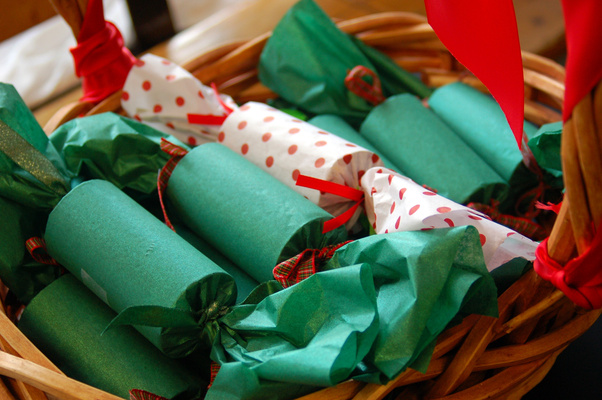
These can be made and saved for Christmas Day and can be filled with beautiful collected treasures as well as handwritten jokes and paper crowns.
You will need: empty toilet paper rolls or cardboard tubes, festive wrapping or tissue paper, thin ribbon or twine, small treasures (tiny wooden figures, polished stones, small felted animals, wax-dipped pinecones, or seasonal treats), handwritten jokes or riddles, paper crowns (cut from coloured paper), glue stick or double-sided tape, scissors, and optional cracker snaps.
Cut a piece of festive wrapping paper to fit around the cardboard tube with some extra on either side for twisting. If using a cracker snap, tape it securely along the inside of the cardboard tube, letting the ends extend out.
Place a small treasure, a handwritten joke, and a folded paper crown inside the tube. Make sure the items are not too heavy so the cracker can still be pulled apart easily.
Roll the cardboard tube in the wrapping paper, securing it with glue or double-sided tape. Twist one open end gently and tie it with ribbon or twine. Make sure the filling stays inside before twisting the second end and tying that closed as well.
Add stickers, hand-drawn designs, or pressed leaves to the wrapping paper for an extra festive touch. If using plain paper, invite children to decorate it with seasonal drawings before assembling.
Acts of Kindness
Carrying the intention of bringing light and goodness to the world, children can consciously engage with doing simple things to bring joy to others during this final week.
Write a letter. Work through the process of writing a formal Christmas letter to a loved one living away from your hometown. Encourage children to consider writing about their lives this year, asking questions of the receiver, and including Christmas wishes. Decorate the letter and post it.
Daily acts of kindness. In the spirit of Christmas, set a goal for doing one (or more) deliberate act of kindness each day through the week. Create a ritual at the end of each day to share these and notice how it made you feel.
Bake and share. Help bake a batch of cookies, bread, or another treat and gift it to someone who could use a little extra warmth and care, such as an elderly neighbour or a busy parent.
Write a note of gratitude. Support your child to write a short thank-you letter to a teacher, librarian, or another person in the community who has made a positive impact on them this year.
Spend time with someone who needs it. Sit and listen to a sibling, grandparent, or friend who might need extra attention, read a book to a younger child, or simply offer patient kindness and companionship.
The Week Before the Spiral
Monday. Walk together to gather pine, fir, or spruce boughs. Speak little. Let the children sense the cold and the resin smell.
Tuesday. Hollow the apples. One per child, plus a few extra. Set them on a tray covered with a cloth.
Wednesday. Dip or roll beeswax candles from sheets. Let even small hands try.
Thursday. Practise the Advent songs together at the supper table, slowly, by memory.
Friday. Polish the wooden floor or sweep the room where the spiral will lie. Set out the central candle holder. Choose the quiet clothes.
The Spiral Day, Morning to Evening
Quiet morning. No errands, no screens. A simple breakfast, a walk outdoors, a basket of handwork or drawing. The day moves at half speed.
Laying the spiral, midday. Parents, with older children helping, lay a generous spiral of evergreen boughs on the floor of a darkened room. The spiral should be wide enough for a child to walk comfortably, with a clear path inward and outward. Place the central candle on a low stand or stone in the middle. Set a small table nearby with the apple candles, one per child, and matches or a taper for the parent.
The ceremony, late afternoon as the dark gathers. Draw the curtains. Light only the central candle. Gather the family around the spiral. Sing softly. One by one, each child takes an apple, walks the spiral inward, lights the candle from the centre, and places it somewhere along the boughs on the way out. Parents walk last, or first, as they choose. When all candles are lit, sit together in the glow and sing one closing verse.
A simple meal afterward. Warm bread, soup, a spiced drink. Eat by candlelight. Speak gently or not at all.
An early bedtime. Carry the wonder straight into sleep. Leave the spiral candles burning safely until they go out, or extinguish them quietly together.
Recipes
Hollowing Apples to Hold Beeswax Candles
You will need: firm apples, a sharp paring knife, an apple corer or melon baller, and short beeswax candles roughly 1.5 cm in diameter.
Wash and dry the apples. Choose ones with flat bottoms that sit steady.
With the paring knife, cut a small circle on top around the stem, the width of your candle.
Use the corer or baller to scoop a hole about 3 cm deep. Test fit the candle.
Press the candle in firmly so it stands upright with no wobble. If loose, drip a little melted wax into the hole first.
Safety. This is adult work for the cutting. Children may scoop the hollow with a small spoon under supervision. Trim candles short, no more than 8 cm above the apple, so they burn down before reaching the fruit. Place lit apples only on stone, slate, or the green boughs, never on bare wood or cloth. Keep a damp cloth and water nearby. Never leave the spiral unattended while lit.
Simple Advent Stollen
A modest, fragrant loaf, not too sweet, that keeps for several days.
Ingredients
500 g bread flour, 7 g instant yeast, 80 g sugar, 1 tsp salt
1 tsp ground cardamom, half tsp cinnamon, zest of one lemon
200 ml warm milk, 100 g soft butter, 1 egg
100 g raisins soaked in warm water and drained
60 g chopped almonds, 50 g candied orange peel
For finishing: 50 g melted butter and icing sugar
Method
Mix flour, yeast, sugar, salt, spices, and zest in a large bowl. Add warm milk, soft butter, and egg. Knead for 8 to 10 minutes until smooth. Work in raisins, almonds, and peel. Cover and let rise 90 minutes.
Shape into an oval loaf, fold one long side over the other to make the traditional stollen shape. Rise 45 minutes. Bake at 180 C for 35 to 40 minutes until deep golden. While warm, brush generously with melted butter and dust thickly with icing sugar. Wrap in cloth and rest a day before slicing.
Spiced Cocoa for the Candle-Lighting
Warm 1 litre whole milk gently. Whisk in 4 tablespoons cocoa powder, 3 tablespoons honey or maple syrup, a pinch of salt, half a cinnamon stick, two cloves, and a thin slice of fresh ginger. Heat slowly without boiling for ten minutes. Strain into mugs.
Advent Songs and Verses
Advent, Advent, ein Lichtlein brennt, traditional German.
Advent, Advent, ein Lichtlein brennt.
Erst eins, dann zwei, dann drei, dann vier,
dann steht das Christkind vor der Tur.
In English: Advent, Advent, a little light burns. First one, then two, then three, then four, then the Christ child stands at the door.
A spiral song, traditional, sung softly as children walk.
Now the darkness gathers,
stars begin to peep,
birds and beasts and flowers
soon will be asleep.
A Story for Children: The Apple That Carried a Star
Once there was a little girl named Mira who had never walked the spiral before. She held her apple carefully in both hands. The candle in its hollow was straight and small and quite unlit. The room was very dark. Only one candle burned, far away at the centre, like a single star that had drifted down to rest on the earth.
Mira’s feet moved slowly along the green path. The pine smelled sharp and clean. She could hear her own breathing. When she reached the centre, she bent down, and her candle touched the flame, and suddenly she was carrying a star of her own.
She walked outward more slowly than she had walked in, because now she had something to keep safe. Near the edge of the spiral she knelt and set her apple down among the boughs. Her star stayed where she put it. It did not go out.
When she looked back from the doorway, the spiral was full of small lights, and she knew that one of them was hers, and that all of them were shining together.
Materials List
Pantry
Bread flour, yeast, sugar, salt, butter, egg, milk, raisins, almonds, candied peel, lemon, cardamom, cinnamon
Cocoa, honey, cloves, ginger for spiced cocoa
Nature table / Advent space
Conifer branches and willow base for the Advent wreath
Four Advent candles
Stones, crystals, shells, a small bowl of salt for week one
Plants, cones, pressed flowers for week two
Wooden or felted animals for week three
Nativity figures for week four
Weekly crafts
Two 20 cm sticks and coloured yarn for God’s Eye stars
Smooth river stones, wool roving, soap, a bowl for felted stones
Tissue paper in many colours, florist’s wire for tissue paper roses
Wool roving, acorn caps, soap, glue for felted acorns
White wool roving, felting needle, felting mat for needle-felted sheep
Journal, pencils, watercolours, fine-tip pen for nature journalling
Cardboard tubes, tissue paper, ribbon, small treasures for crackers
For the spiral itself
A generous armful of fir, spruce, or pine boughs
A central candle on a low stone or wooden stand
Matches, a long taper for the parent
A damp cloth and a bowl of water nearby
A swept, clear floor in a room that can be fully darkened
Adapting for Different Ages
For the youngest (ages 3 to 6)
Do not explain. The wonder is the whole point. The small child receives the image directly through the senses: the dim room, the smell of pine, the warmth of the flame, the slow walk. Hold their hand if they wish, or walk just behind them. If they are shy, walk the spiral together as one. The weekly Advent crafts can be as simple as handing them a small stone or a dried leaf to add to the table each day.
Grades 1 to 3
The child walks the spiral alone now, and this is an enormous moment. They feel the responsibility of the flame. Trust them. Let the silence hold them. Afterward they may want to talk, or they may want to be quiet, and both are right. Many adults remember their first solo spiral walk for the rest of their lives. The weekly crafts give them real handwork to focus on: felted stones, God’s Eye stars, tissue paper roses, felted acorns, all sit beautifully in this age.
Grades 4 to 8
Older children may help lay the spiral in the afternoon, choose the central candle, or hold the candles for younger siblings while they walk. Their reverence transmits directly to the little ones. Invite them into the preparation as fellow keepers of the festival, not as helpers being managed. Week three’s nature journalling and week four’s acts of kindness suit this age particularly well; older children can choose their own act of service and carry it through.
A Note for the Parent
This is a sacred, hushed festival. The temptation at home is to make it bigger, brighter, more festive. Resist. With one child, the spiral can be small, only three or four turns, and the ceremony may last ten minutes. With two, take turns, and let the second watch while the first walks in awe. You do not need a crowd, you do not need music beyond your own voice, you do not need anything you do not already have.
What the children will remember is not the size of the spiral but the quality of your attention. Light the central candle, lower your voice, walk slowly, and trust the form. The festival does the rest.
About This Guide
This guide was written in collaboration with Sophie, co-founder of Starpath Learning and a Waldorf teacher, homeschool mentor, and curriculum developer. The four weekly Advent themes, the Advent wreath and table guidance, the verses, the weekly crafts (God’s Eye stars, felted stones, tissue paper roses, felted acorns, needle-felted sheep, nature journalling, Christmas crackers), and the acts of kindness all come from her original Seasonal Celebration Toolkit.
Further Reading
Georg Dreissig, The Light in the Lantern — stories that follow Mary, Joseph, and the little donkey through the four weeks of Advent
Cooper, Fynes-Clinton and Rowling, The Children’s Year (Hawthorn Press)
Druitt, Fynes-Clinton and Rowling, All Year Round (Hawthorn Press)