

May Day (May 1, with Walpurgis Eve on April 30) is the joyful spring festival of full bloom. This is the festival of flower crowns, Maypole dancing with ribbons, and processions through wildflower meadows. Where Easter quietly renewed life, May Day is full extroversion: out into the world, into the wildflowers, into community. This guide brings you the story, the rhythm of the two days, recipes, Sophie’s flower-crown weaving, the Maypole, songs, and age-appropriate ways to celebrate at home.
The Story
May Day is the great spring festival of full bloom, kept across Europe for many centuries. In the Celtic calendar it is Beltane, the fire feast that opens summer. Two bonfires were lit on the hillsides, and cattle were driven between them for blessing and protection before going up to the high pastures. Fire meant fertility, courage, and the kindling of warmth in the year ahead.
In the German lands, the night before May Day is Walpurgisnacht. Folk tradition told of witches gathering on the Brocken mountain, and bonfires were lit through the villages to drive away the last lingering winter spirits before the bright day arrived.
By morning, May Day itself unfolded in joy. The Maypole stood as the world tree, axis of heaven and earth, and the ribbons woven around it became the weaving of community. A May Queen and sometimes a May King were crowned with flowers. Spring stood in her full radiance, and the people danced.
Why It Matters in Waldorf Education
In Waldorf traditions, May Day is described as the marriage of sun and earth. Through winter the earth held her forces inward; at Easter she began to breathe out; by May Day she is fully open, and the elemental beings of nature, the gnomes, undines, sylphs and salamanders, dance freely in the warm air. The whole landscape is alive.
For the Waldorf family this is the festival of joy and beauty in childhood. After the inwardness of Lent and the quiet renewal of Easter, May Day is full extroversion. We step out into the world, into the wildflower meadows, into community with neighbours. Children gather flowers, weave them into crowns, and dance under ribbons that flicker in the spring light.
There is no lesson to learn here beyond the lesson of beauty itself. The festival is permission to be visible, colourful, and wholeheartedly glad.
For the Southern Hemisphere
May 1 in the Southern Hemisphere falls in autumn, not spring, and so May Day as such is not kept on its Northern date. Instead, the whole body of this festival, the flower crowns, the Maypole, the ribbons, the procession through wildflower meadows, the May Queen, travels across the year and becomes the Southern Hemisphere Spring Festival in September or October.
Pick a day when your spring is clearly visible through blossom, birdsong, and a softening of the air. Mid-September to mid-October usually works. Use this guide as your plan: the ribbons, the bread, the crowns, the songs, and the festival day rhythm below all translate directly. The Walpurgis bonfire sits less naturally inside a Southern spring and is usually skipped, or replaced by a small daylight fire for warmth and gathering.
Some families keep a small marker on May 1 itself, now in the quiet of autumn, as a remembering gesture, a single flower on the nature table, a song from the Northern tradition. But the real festival travels with the season. In the Southern Hemisphere, the full May Day lives in September.
The Week Before
Gather long ribbons. Choose spring colours (pale pink, sky blue, soft yellow, leaf green, lilac, white). One ribbon per dancer, about twice the height of the Maypole.
Practise flower crowns. Do a trial run with whatever blossoms are out, so children know the weaving technique before the day.
Practise the Maypole steps. In the garden with a small pole or even a broomstick, so the weaving is familiar.
Learn the songs together. "Now Is The Month of Maying" and "All the Birds Sing Up in the Trees" are perfect for this festival. Sing at the breakfast table each morning of the week.
Bake May bread dough the day before, or prepare the starter, so festival morning is unhurried.
Prepare the bonfire wood if you are keeping Walpurgis Eve: dry seasoned wood, a clear stone or earth circle, water bucket nearby, no overhanging branches.
Festival Days: Walpurgis Eve and May Day
Evening of April 30, the Walpurgis bonfire. Light a small, well-contained fire as dusk falls. Sing together. Older children and adults may leap over the dying embers when the flames have settled into a low glow, never the open flame. Keep a bucket of water and a rake within arm’s reach. End by stirring the ashes flat.
Dawn of May 1, flower gathering. Rise early and walk out with baskets to gather what is in bloom: dandelions, daisies, cow parsley, bluebells, apple blossom, lilac, forget-me-nots. Take only a little from any one plant.
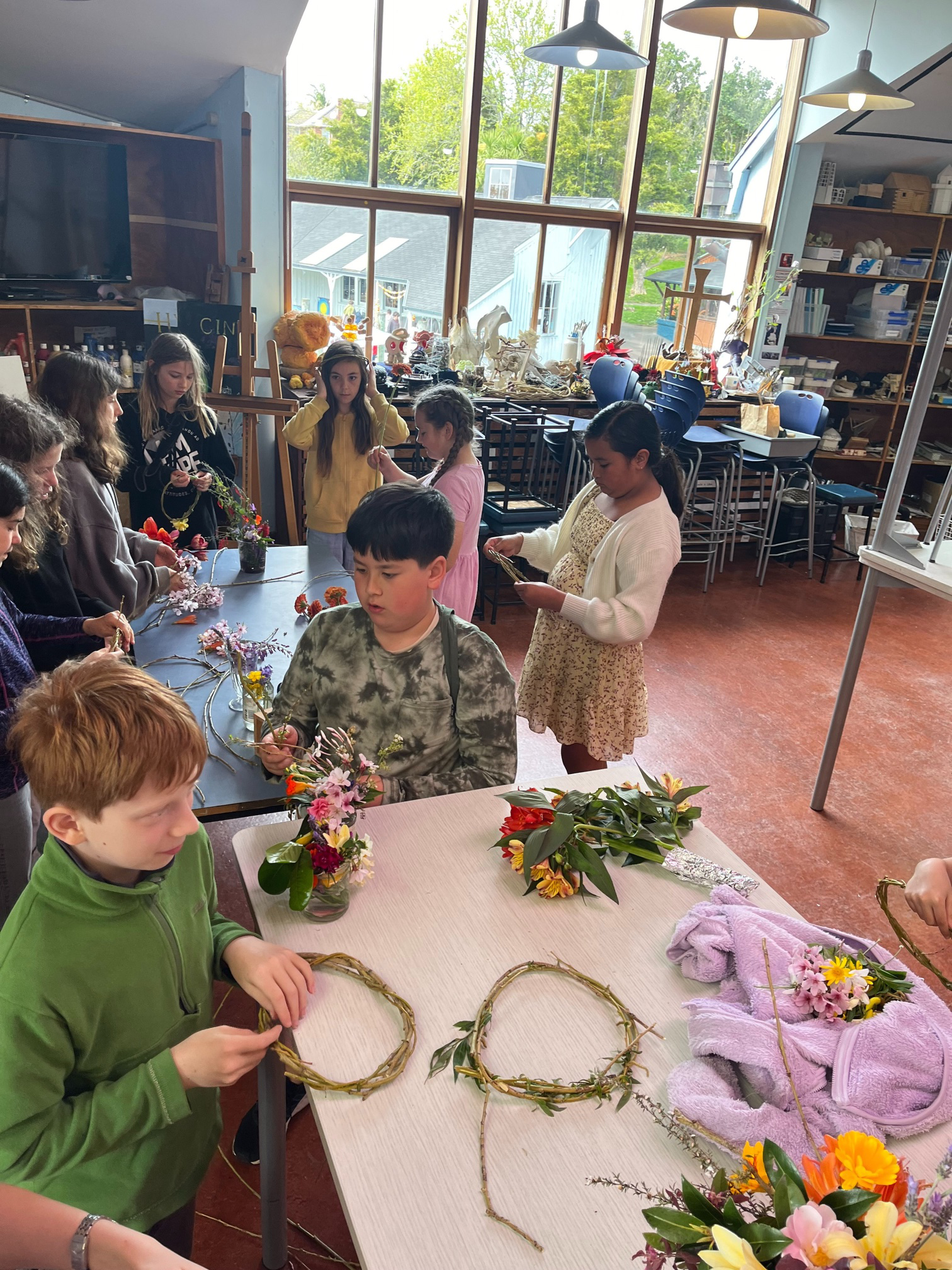
Mid-morning crown-making. Spread the flowers on a clean cloth. Children dress in white or pale clothing. Make crowns together at a sunny table.
Procession to the meadow. Walk in a small line to the chosen spot, carrying the Maypole if it is portable, or meeting it where it stands. Sing as you go.
The Maypole dance. Each dancer takes a ribbon. Alternate dancers face opposite directions. Weave in and out, over and under, while singing. The ribbons braid down the pole.
Afternoon picnic and games. Lay a long cloth, share the May bread and a cordial, play ring games including "In and Out the Dusty Bluebells" (below). Then a gentle wind-down at evening with a story and quiet song.
Recipes
May Bread (flower-braided loaf)
A soft, lightly sweet braided loaf, decorated with edible spring flowers.
Ingredients
500 g strong white flour, 7 g instant yeast, 1 tsp salt, 50 g sugar
250 ml warm milk, 1 egg, 60 g soft butter
Zest of one lemon
To decorate: one beaten egg, edible flowers (violets, primroses, daisies, apple blossom, calendula, all clean and dry).
Method
Whisk flour, yeast, salt, sugar and lemon zest in a large bowl. Add warm milk, egg and butter. Mix to a soft dough and knead for 8 to 10 minutes until smooth and springy. Cover and prove in a warm place for about 90 minutes, until doubled. Knock back gently, divide into three equal pieces, and roll each into a long rope about 40 cm long. Pinch the tops together and braid loosely; tuck the ends under. Lift onto a lined baking tray. Cover and prove for another 40 minutes. Brush with beaten egg. Press fresh edible flowers gently onto the surface in a pattern. Bake at 180 C for 25 to 30 minutes, until golden and hollow when tapped. Cool on a rack.
Lemon-Mint Cordial
Pare the zest of 4 lemons. Bring 1 litre water and 500 g sugar to a simmer until dissolved. Add the zest, the juice of the lemons, and a generous handful of fresh mint. Cover and steep overnight. Strain, bottle, and keep refrigerated. Serve diluted with cold water and a slice of lemon. Elderflower cordial works equally well if the elders are out.
Picnic Spread
A cold cheese and herb quiche, a green salad with edible flowers scattered on top, radishes with butter and salt, strawberries, sliced May bread, soft cheese, and the cordial. Simple, bright, and easy to carry in a basket.
Crafts
Flower Crowns
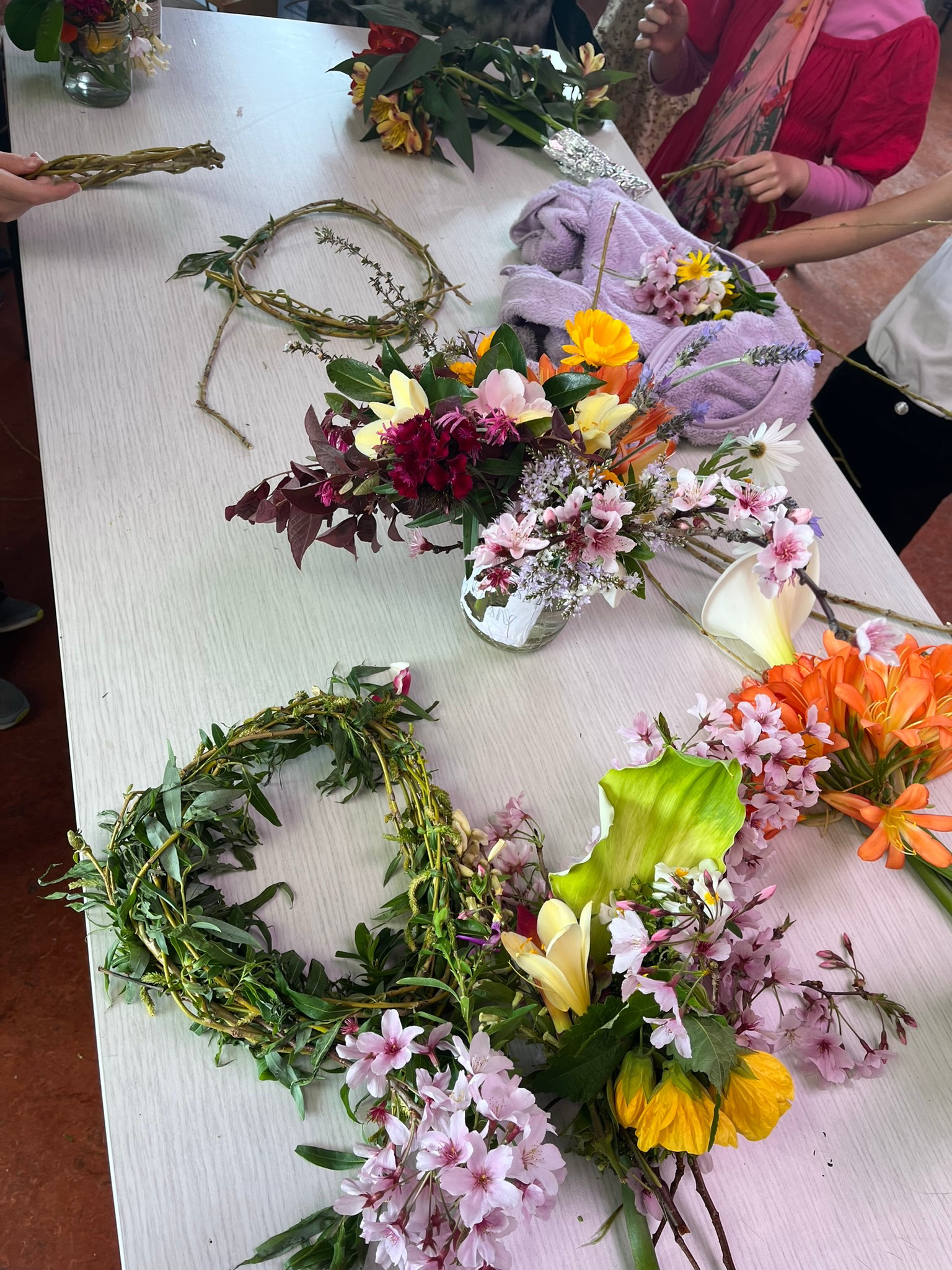
You will need: flexible wood such as willow, wisteria, or young grapevine; a selection of fresh flowers, leaves, and greenery; scissors or garden shears; and a small bucket of water if preparing materials in advance.
Prepare the wood. Find long, flexible branches (about 1 metre in length). Willow is ideal, but any bendable wood works. Strip off the leaves and trim to size. Avoid thick branches, as they will not bend easily. If gathering in advance, soak the branches in water to keep them pliable.
Shape the crown base. Take one length of wood and bend the thinner end into a circle roughly the size of a head. Weave the remaining length in and out of the circle, securing it as you go. If the crown feels too weak, reinforce it by weaving in a second branch.
Decorate with flowers and greenery. Gather an assortment of seasonal flowers, leaves, and soft vines. Tuck them securely into the woven base, layering colours and textures. Adjust as needed to create a balanced and beautiful crown.
Wear and celebrate.
The Maypole
You will need: a straight wooden pole 2 to 3 metres long (a peeled larch sapling is traditional, a smooth dowel works well), 6 to 8 ribbons of 5 to 6 metres each in spring colours, a sturdy ring or eye-screw fixed to the top, strong twine, and a deep hole or heavy stand.
Tie all the ribbons securely to the ring at the top of the pole, evenly spaced.
Add a wreath of greenery around the top, just below the ribbons.
Setting up safely. Dig a hole at least 50 cm deep in firm ground, drop the pole in, backfill with soil and stones, and tamp down hard. Test it can withstand a strong tug before any child takes a ribbon. If you cannot dig, use a heavy Christmas-tree stand weighted with sandbags, set on level ground, and station an adult to steady the pole during the dance.
Allow at least 2 metres of clear space around the pole on all sides.
Felted Flowers for the Nature Table
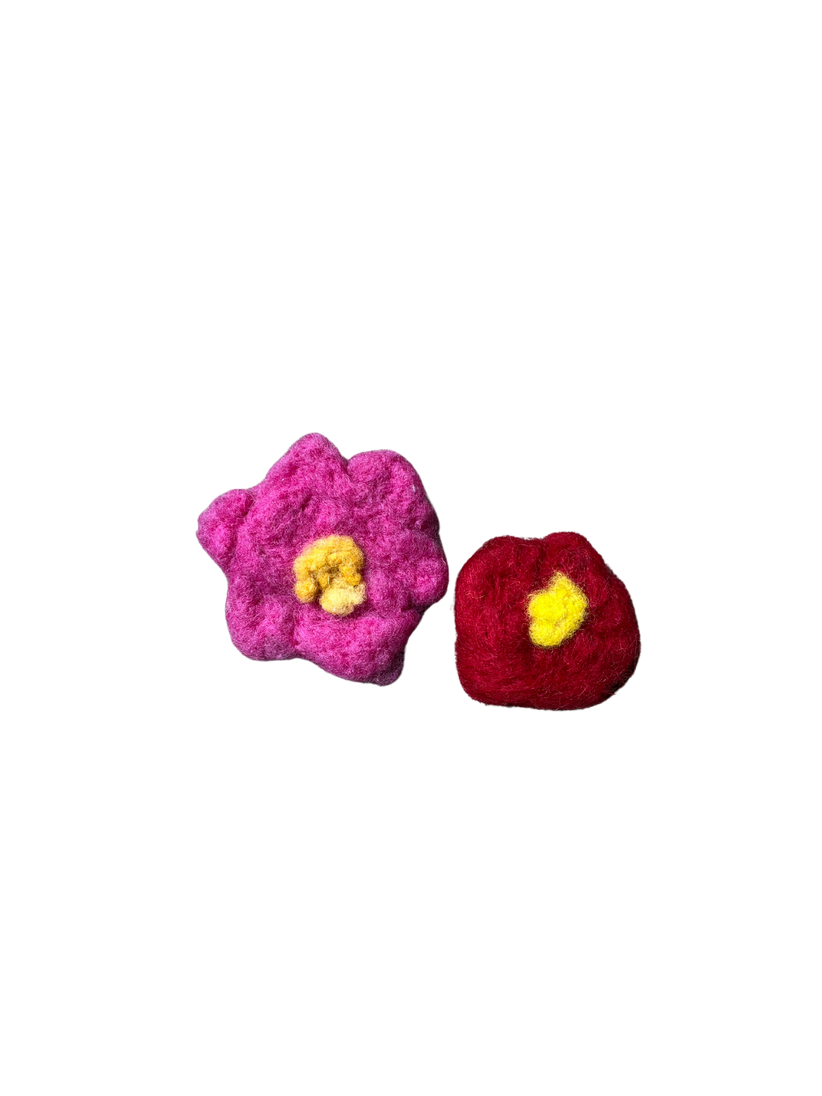
You will need: wool roving in soft spring colours (greens, yellows, pinks, purples, blues), a felting needle, a foam felting mat, flower-shaped cookie cutters (optional), and pipe cleaners (optional, for stems).
In the week leading up to May Day, felt small flowers to dress the spring nature table. Place a foam felting mat on your work surface, spread small tufts of wool roving inside a cookie cutter, and poke gently with the felting needle, working around the edges first. Turn the flower over occasionally for even firmness, then layer yellow or orange for the centre and green for small leaves. For a stem, wrap a pipe cleaner with green wool and felt lightly to secure.
Door Wreaths
Bend a length of supple willow or grapevine into a circle and tie with twine. Tuck small bunches of leaves and flowers all around, securing with thin wire as you go. Hang on the front door for the day.
Group Activity: Spring Nature Mandala
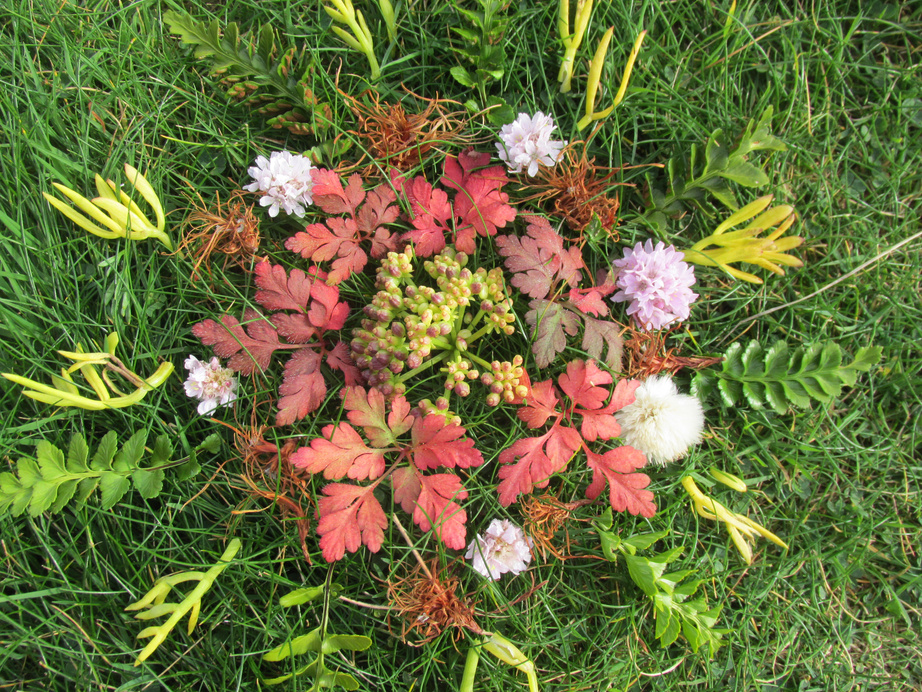
If your picnic spot allows, go on a short nature walk together first and collect petals, leaves, small flowers, and smooth stones. Find a flat space on grass or bare earth, and start by placing a special object in the middle (a large flower, a unique stone, a cluster of petals). Build outward in circles radiating from the centre, using repeating patterns. Stand back together when it is finished.
Nature mandalas are temporary by design; leave it for others to enjoy, or gently return the materials to the earth. A beautiful, quiet counterpoint to the bright joy of the Maypole.
Songs and Verses
Now Is The Month of Maying, first verse (Thomas Morley, 1595, public domain).
Now is the month of Maying,
When merry lads are playing, fa la la,
Each with his bonny lass,
Upon the greeny grass. Fa la la la la.
Maypole Dance Song, traditional English, public domain.
Come lasses and lads, take leave of your dads,
And away to the Maypole hie,
For every he has got him a she,
And the fiddler’s standing by.
All the Birds Sing Up in the Trees. A circle dance: stand in a circle holding hands, while a few children are chosen to be little birds flying inside. The circle moves to the left, then pauses and raises arms as arches for the birds to fly in and out. The birds return to the centre, and the circle moves to the right.
All the birds sing up in the trees,
now that spring is coming.
Listen, listen, what do they say?
Springtime is the time to be gay!
All the birds sing up in the trees,
Now that spring is coming.
A spring verse in the Steiner mood.
The sun rays warm,
The flowers bloom,
The breezes blow,
The birds sing free,
And in my heart
There sings the spring.
Group Game: In and Out the Dusty Bluebells
A simple and beloved ring game, perfect for mixed ages on a sunny picnic afternoon. Children form a circle with arms raised as arches. One child weaves in and out of the arches while everyone sings. When the song ends, the weaving child taps the next leader on the shoulder and joins the circle. Repeat until everyone has had a turn.
In and out the dusty bluebells, in and out the dusty bluebells, in and out the dusty bluebells, who shall be my partner?
A Story for Children: The First May Crown
In the small house at the edge of the lane lived old Mrs. Aren, who was very quiet and kept a garden of foxgloves and roses. The children of the lane sometimes waved to her over the hedge, but no one knew her well.
On the morning of May Day, little Hanne went out with her basket to gather flowers. She picked daisies and forget-me-nots, dandelions and a sprig of apple blossom. As she passed Mrs. Aren’s gate she saw the old woman sitting alone on her step, watching the children run by.
Hanne stopped. She knelt on the grass and wove the prettiest crown her small hands could manage, with a yellow centre and a ring of white all around. Then she pushed open the gate and walked up the path.
"You are the May Queen today," she said, and placed the crown gently on Mrs. Aren’s silver hair.
Mrs. Aren did not speak for a long moment. Then she smiled, and the smile was as bright as the morning sun.
Materials List
Pantry
Strong white flour, instant yeast, sugar, milk, eggs, butter, lemons, fresh mint
Edible flowers for May bread and picnic salad
Picnic foods: cheese, radishes, strawberries, soft cheese, quiche
Nature table
A green or pale yellow cloth
Fresh wildflowers in a small jar, felted flowers, a beeswax candle
A small wooden Maypole figure or a tiny crown of flowers, if you have one
Crafts
Ribbons in 6 to 8 spring colours, florist wire, pipe cleaners, scissors, twine
Willow or ivy lengths for crowns and door wreaths
The Maypole, a sturdy ring or eye-screw at the top, heavy stand or hole
Wool roving, felting needle, foam mat, optional cookie cutters for felted flowers
For the day
White or pale clothing, baskets for flower gathering
A picnic blanket
A water bucket and rake near the bonfire, sun hats
Adapting for Different Ages
For the youngest (ages 3 to 6)
Picking flowers in a basket, watching the older children dance, wearing a simple crown made by a parent, and holding the end of a single ribbon while an adult moves with them through the Maypole weave. The nature mandala is lovely for this age too, endlessly arranging petals in small circles.
Grades 1 to 3
The first real Maypole dance with a simple in-and-out weave, learning to keep rhythm with the song, helping bake the May bread, and making their own flower crown with light help. The "In and Out the Dusty Bluebells" ring game holds a whole afternoon for this age.
Grades 4 to 8
More complex Maypole weaves such as the spider’s web and the plait, learning the history of Beltane and Walpurgisnacht, leading the dance for the younger ones, and taking responsibility for setting up the pole or tending the bonfire under adult supervision.
A Note for the Parent
May Day asks nothing of you except that you allow yourselves to be joyful and visible. After the contemplative festivals of Lent and Easter, after the inward listening of winter, here is permission to step into the open with ribbons and flowers and a loaf of bread on a blanket.
The beauty is the meaning. There is no deeper teaching to extract, no inward work to do today. Stand in the meadow, watch the children dance, hear them laugh, eat the bread you made together, and let the whole bright day be enough. This is the gift of spring, freely given.
About This Guide
This guide was written in collaboration with Sophie, co-founder of Starpath Learning and a Waldorf teacher, homeschool mentor, and curriculum developer. The flower crown weaving, the felted flowers craft, the spring nature mandala, the "All the Birds Sing Up in the Trees" circle dance, and the "In and Out the Dusty Bluebells" ring game all come from her original Waldorf festival materials.
Further Reading
Cooper, Fynes-Clinton and Rowling, The Children’s Year (Hawthorn Press)
Carey and Large, Festivals, Family and Food (Hawthorn Press)
Druitt, Fynes-Clinton and Rowling, All Year Round (Hawthorn Press)