

Michaelmas falls on September 29, the cardinal festival of the falling year. It is a celebration of courage, service, and gratitude, and an invitation to gather the resilience we need as the outer world begins to grow quieter and the nights grow longer. This guide brings together everything you need to keep Michaelmas at home: the story, the rhythm of the week before, recipes, crafts, songs, and age-appropriate ways to bring each part to life with your children.
The Meaning of the Festival
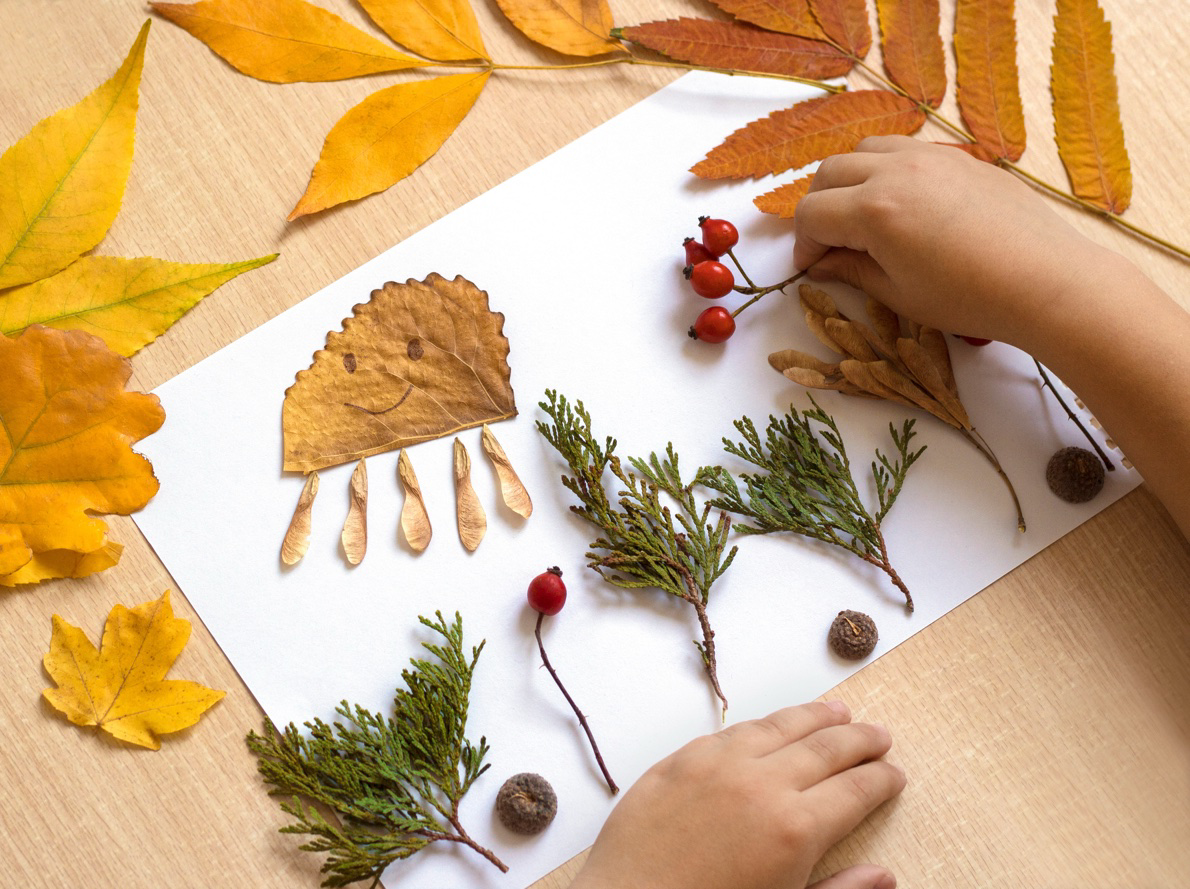
The Autumn Festival is a celebration of courage, inner strength, and the balance between light and dark as the seasons shift toward winter. It is a time of gathering, both the harvest from the land and the resilience within ourselves to face the colder months ahead. The festival’s themes reflect the natural world: the golden fields, ripening fruits, crisp air, and the last burst of warmth before the quiet inward turn of winter.
Traditionally, this festival calls upon the imagery of dragons, bravery, and overcoming challenges. It reminds us that as the days shorten and darkness grows, we must nurture our inner light. The festival often includes stories of courage, tales of standing firm in the face of adversity, of good prevailing over hardship. This is especially vivid if you align your celebration with Michaelmas on September 29, named for the Archangel Michael, whose story of taming the dragon has been told for centuries.
In a Waldorf approach, the Autumn Festival is a time for community, strength, and gratitude. It is a time for celebrating the harvest and also an opportunity for sharing, sharing the fruits of harvest, or in a more urban setting, sharing food with those less fortunate, or doing acts of kindness and service to those who need it.
Why It Matters in Waldorf Education
Michaelmas is one of the four cardinal festivals of the Waldorf year, and it sits directly opposite Easter on the wheel. Where Easter is the great outbreath of spring, Michaelmas is the beginning of autumn’s inbreath. As the outer light begins to withdraw, we are asked to kindle a small inner light to meet the coming darkness.
In Waldorf traditions, this inner work is described as courage, and courage is linked closely to iron, the metal of Mars, which lives in our blood. At this time of year, meteoric iron is said to shower the earth’s atmosphere, a quiet cosmic echo of the iron rising in our own will. The image is a beautiful one: the strength to face the dark months ahead comes not from outside us, but from something stirring within.
The dragon, then, is not an enemy we meet on the road. It lives inside us. It can look like fear, or sluggishness, or the wish to stay small and safe. Michaelmas invites us, with our children, to notice what inner dragon we might tame this year, not with anger, but with steady, quiet courage.
For the Southern Hemisphere
In the Southern Hemisphere, September 29 falls in early spring. Michaelmas stays on its traditional date, and the theme of courage still lives at the heart of the festival, only now it is the courage of the seed pushing up through cold soil, rather than the courage of the soul turning inward before the dark. Many families keep the story, the dragon hunt, and the bread much as written below, and set them against a spring nature table: green silks, the first buds, small bowls of seeds ready to sow.
The Southern Hemisphere autumn festival, which falls in March or April, is usually kept as a quieter harvest celebration on its own, without Michaelmas imagery. The dragon and the knight belong to September, whether that September is crisp or sun-warmed where you live. What matters most is not the exact time of year, but the sense of rhythm, reverence, and connection the festival brings to our children.
An Autumn Story: The Princess and the Dragon
A full original story by Sophie, suitable for children of all ages.
Once, in a land where golden fields stretched to the horizon and mighty mountains touched the sky, there lived a noble king named King Aldric. He ruled with wisdom and kindness, and in his castle lived a band of brave knights, strong, swift, and steadfast in their loyalty. But the light of his kingdom, the one he treasured above all else, was his daughter, Princess Elenora.
One crisp autumn morning, as the leaves turned to fiery red and gold, a messenger arrived, weary from travel. He bore a plea from the distant kingdom of King Edric, across the mountains. A terrible dragon had descended upon his land, scaring the villagers and setting fields alight. With harvest time fast approaching, they feared they would have no food to last through the winter.
"I have heard of your noble knights," the message read. "I beg you, send them to aid us."
King Aldric turned to his knights at once. "Who will go and rid our neighbour of this terror?"
The knights rose in unison. "We shall ride at once, Your Majesty!"
But before they could leave, Princess Elenora stepped forward. "Father, let me go with them!"
The king frowned. "Elenora, this is no journey for a princess."
"But I am strong and quick," she pleaded. "And I wish to help!"
Though reluctant, King Aldric saw the fire of courage in her eyes and at last relented. And so, the company set forth, over hills, through forests, and into the high mountain pass that led to King Edric’s troubled land.
When they arrived, they found the villagers fearful and wary. "The dragon strikes without warning," they said. "It swoops from the sky, roaring like thunder, and its breath sets the fields ablaze!"
"Where does it have its lair?" asked the knights.
None knew for certain, but at last, an old woman pointed to a distant peak. "The beast is said to dwell beyond that mountain."
Determined, the knights climbed a high hill to gaze upon the land. The wind carried the scent of ripening apples, and the trees whispered in the crisp air. But as they looked toward the distant mountain, a shadow swept across the meadow.
With a rush of wind and a terrible cry, the dragon burst from the sky. Before the knights could act, its great talons seized Princess Elenora and lifted her into the air.
"Elenora!" they cried.
But the dragon soared high and fast, vanishing beyond the mountain peaks. Without wasting a moment, the knights gave chase, crossing rivers, climbing steep ridges, and forging on through the thickening mist.
At last, they reached the dragon’s cavern, deep in the mountain’s heart. But when they rushed inside, swords drawn, they halted in astonishment.
Princess Elenora stood before them, unharmed, draped in the dragon’s hoard of glittering jewels. Beside her sat the dragon itself, not roaring in fury, but calm, watching her with gentle eyes.
"You have nothing to fear," Elenora said. "He is not our enemy."
The knights hesitated. "But the fields, the fires…"
Elenora turned to the dragon. "You were trying to tell them something, weren’t you?"
The great beast nodded its massive head.
"He has been enchanted," the princess said. "I believe the spell can be broken, but we must bring him home."
The knights murmured among themselves, uneasy, but their trust in Elenora was strong. "Very well," they agreed.
And so, the strange company made their way back, knights, princess, and dragon. As they approached King Aldric’s castle, the great doors slammed shut, and guards stood at the ready upon the ramparts.
"The dragon holds them hostage!" someone shouted.
But Elenora ran forward. "Father, wait!" she called. "He is our friend!"
King Aldric hesitated. The dragon lowered its head, and at that moment, something changed. A shimmer ran across its scales, and with a great gust of wind, they fell away, revealing not a fearsome beast but a young man, noble and fair.
The court gasped. The young man looked to King Aldric and bowed. "I am Prince Eamon, son of King Edric. Long ago, I was cursed and turned into a dragon. I only sought help, but the villagers feared me."
King Aldric, King Edric, and all their people marvelled at the truth. A great feast was held in celebration, and Prince Eamon, forever grateful to Princess Elenora’s courage, vowed his friendship to both kingdoms.
"But our work is not yet done," said Elenora. "The harvest still awaits."
And so, together, the knights, the princess, and Prince Eamon journeyed back over the mountains. They laboured side by side with the villagers, gathering wheat and apples, pumpkins and grapes, nuts and golden corn.
And when at last the work was done, they returned home, weary but content, knowing that the land was safe, the people well-fed, and the friendship between their kingdoms stronger than ever.
The Week Before
The festival lives in the preparation, not the day. A simple week could look like this.
Pick a date. Wait until autumn is clearly visible through foliage, harvest, and weather. Michaelmas proper is September 29, but a few days either side works.
Set up a seasonal table. Warm autumn colours: golden yellow, orange, red. A beeswax candle, a few apples, sunflowers going to seed, a small figure of Michael or a knight, a dragon of clay or felt under a stone.
Gather natural elements. Dried leaves, cones, autumn berries, acorns. Add to the table as the week goes on.
Tell a dragon story each evening. Saint George, Iron Hans, the Princess and the Dragon above, or a simple tale you make up about a child who meets a small dragon of their own.
Gather the craft materials. High-quality paper and crayons for leaf rubbings. Wool roving for felted pumpkins. Walnut shells and felt scraps for mice. Have the dragon-bread ingredients measured and ready.
Learn a song together. The Farmer Poem and Come my Sisters, Come my Brothers work well for this festival (both below).
Festival Day, Morning to Evening
Morning, baking the dragon bread. First task of the day, in aprons, with the windows open. While the dough rises, the house begins to smell of the festival.
Late morning, the story. Tell the Princess and the Dragon above, or Michael and the dragon, or let older children act it out for younger ones. A red silk for fire, a blue cloak for Michael, a green silk for the dragon’s hide.
Early afternoon, crafts and the courage quest. Make leaf rubbings or begin a felted pumpkin together. Then hide a paper or felt dragon in the garden or woods. Children go in a small band, with their cardboard swords, find the dragon, and bring back a treasure the dragon was guarding (a basket of apples, a bag of nuts, a star of beeswax for each child).
The festival meal. Dragon bread at the centre, a harvest soup, apples, spiced apple cakes if you have made them. Light a candle. Speak a verse before eating.
Late afternoon, the harvest mandala. In the garden or on a large cloth, arrange gathered harvest (or tins and packets of non-perishable food for donation) into a beautiful mandala pattern. Stand back together. If you have gathered food for donation, deliver it as part of the festival.
Evening, a small fire and the closing verse. A bonfire if you can, a candle if you cannot. Sing one verse. Speak the evening verse. To bed early.
Recipe: Dragon Bread
Makes one large loaf for the festival table.
Ingredients
500 g strong white bread flour
7 g instant dried yeast (one sachet)
1 tsp fine sea salt
1 tbsp honey
30 ml olive oil
300 ml warm water
A small handful of raisins for eyes and nostrils
1 egg, beaten, for glazing
Method
Stir the yeast and honey into the warm water and leave for five minutes until it foams. Mix the flour and salt in a wide bowl, pour in the yeast water and the oil, and bring it together with your hands. Knead on a floured board for ten minutes until smooth and springy. Cover and leave to rise for about an hour, until doubled.
Knock back, and let the children shape the dragon on a lined baking tray. A long fat body, a curling tail, four short legs, a triangular head. Press in raisins for the eyes and nostrils. With clean kitchen scissors, snip rows of small cuts along the back and tail to make scales. Cover loosely and prove for thirty minutes. Brush with beaten egg.
Bake at 200 C (180 fan) for 25 to 30 minutes, until deep golden and hollow-sounding when tapped underneath. Cool on a rack before the feast.
Recipe: Spiced Harvest Apple Cakes
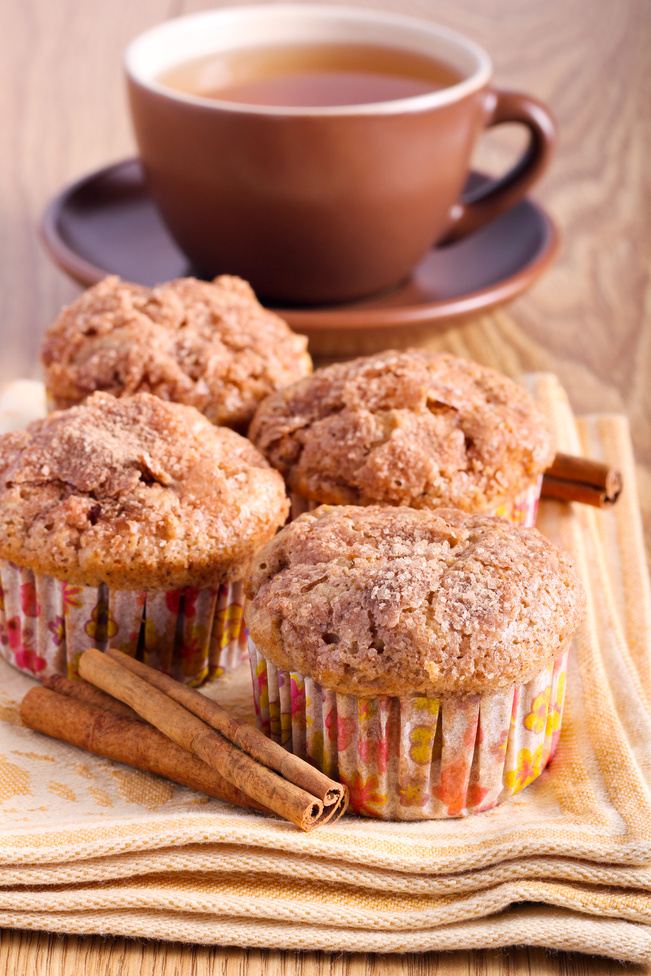
Makes about 12 muffins.
Ingredients
2 cups flour
1 tsp baking soda
1 tsp cinnamon, ½ tsp nutmeg, ¼ tsp cloves, ½ tsp salt
½ cup butter, softened
¾ cup brown sugar
2 eggs
1 tsp vanilla extract
1 cup grated apple
½ cup milk
Method
Preheat oven to 180 C (350 F) and line muffin tins with paper cases. Whisk flour, baking soda, spices, and salt in one bowl. In another, cream butter and sugar, then beat in eggs and vanilla. Stir in the grated apple. Alternate adding flour mixture and milk, stirring gently. Spoon batter into cases, sprinkle with a little extra sugar and cinnamon if you like, and bake for 18 to 20 minutes.
Alternative: Harvest Root Soup
Sweat a chopped onion in butter. Add cubed carrot, parsnip, squash, and a small potato. Cover with stock, simmer until tender, blend until silky. Salt, pepper, a swirl of cream. Serve with the dragon bread torn at the table.
Crafts
Leaf Rubbings
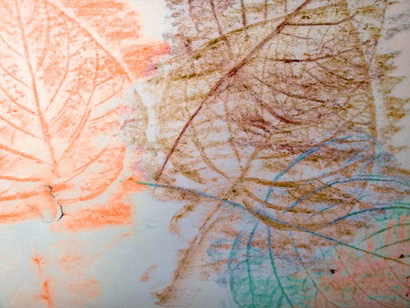
You will need: autumn leaves of different shapes (strong veins work best), white paper or card, peeled wax crayons or Waldorf block crayons, and optionally watercolour paint and a brush.
Collect freshly fallen leaves on a nature walk. Place leaves vein-side up on a smooth surface and lay the paper over the top. Using the side of the crayon, gently rub over the paper. The shape of the leaf will begin to appear. Experiment with different colours and layering. For an extra effect, once the rubbing is complete, lightly wash over the design with watercolours to add texture and colour.
Autumn Leaf Scenes
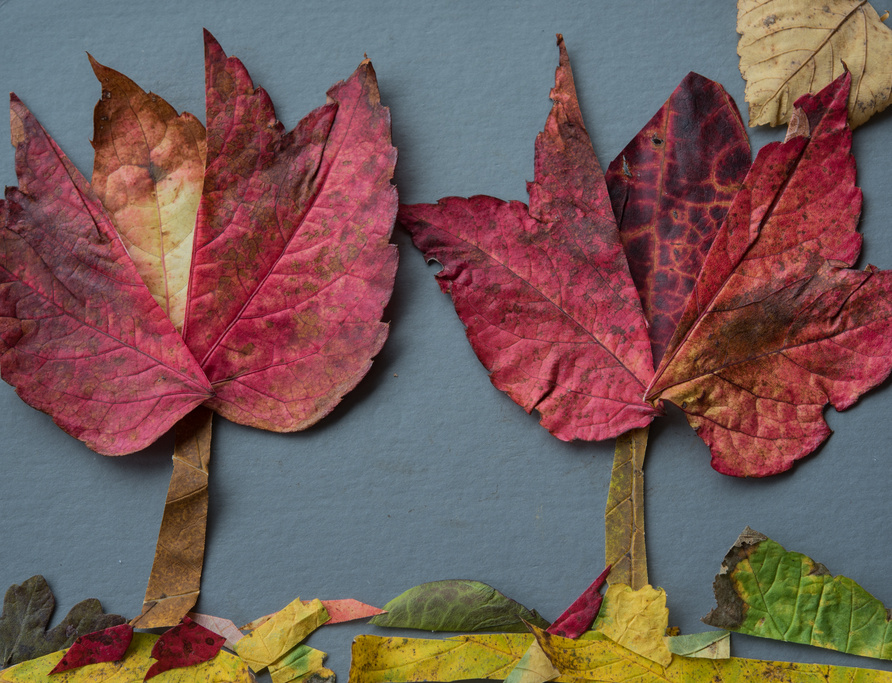
You will need: a variety of autumn leaves (pressed flat for a day), sturdy paper or cardstock, glue, scissors (optional), and markers or crayons for details.
Go on a nature walk to collect fallen leaves in shades of red, orange, yellow, and brown. If leaves are slightly curled, press them under a heavy book for a day before use.
Decide on the scene you want to create: an autumn landscape, swirling leaves in the wind, or a mythical dragon with leaf scales. Arrange the leaves on the paper first to experiment with placement.
Once happy, glue the leaves down. If making a dragon, use long, thin leaves for the tail and wings, and round or jagged leaves for scales. Layer for texture.
Use markers or crayons to add extra details: swirling wind, tree branches, dragon eyes. Let the collage dry before moving.
Painted Autumn Tree
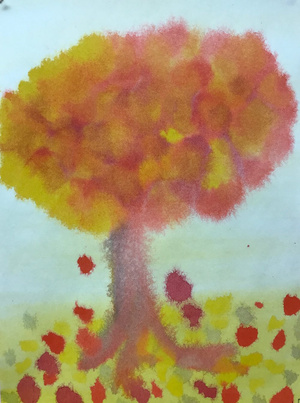
You will need: watercolour paper, watercolour paints in red, yellow, orange, and blue, wide brushes, a jar of clean water, and a sponge.
Soak the watercolour paper in water for a minute, then lay it flat. Dab off excess water. The paper should be damp but not dripping.
Load a wide brush with diluted yellow paint and cover the entire page so the colour glows warmly across the paper.
Using red, start at the bottom and paint a tall, strong trunk, letting the colour blend into the yellow. Go over lightly with blue to make a brown trunk. Add branches stretching upward.
With red, vermillion, and golden yellow, dab and swirl small patches around the branches for the autumn leaves. Dot a few falling leaves lower on the paper.
Leave to dry for 24 hours, then display.
Walnut Shell Mice

You will need: walnut shell halves (cleaned and dried), small pieces of felt, thin string or embroidery thread, strong craft glue or a glue gun, scissors, and a fine-tip marker.
Carefully crack open the walnuts and remove the nut, leaving clean half-shells. Sand any rough edges.
Cut two tiny felt ovals for the ears and a small round for the nose. Glue the ears to the inside edge of the shell so they peek out. Glue the nose to the pointed end.
Cut a small length of felt or thread about 5 cm. Glue one end to the inside back of the shell to make a tail.
Optional: place a small marble inside the shell and glue in place. Once dry, the mouse will wobble and roll when placed on a tilted surface.
Draw two tiny black dots for eyes near the nose. Let everything dry completely before playing.
Felted Wool Harvest Pumpkin
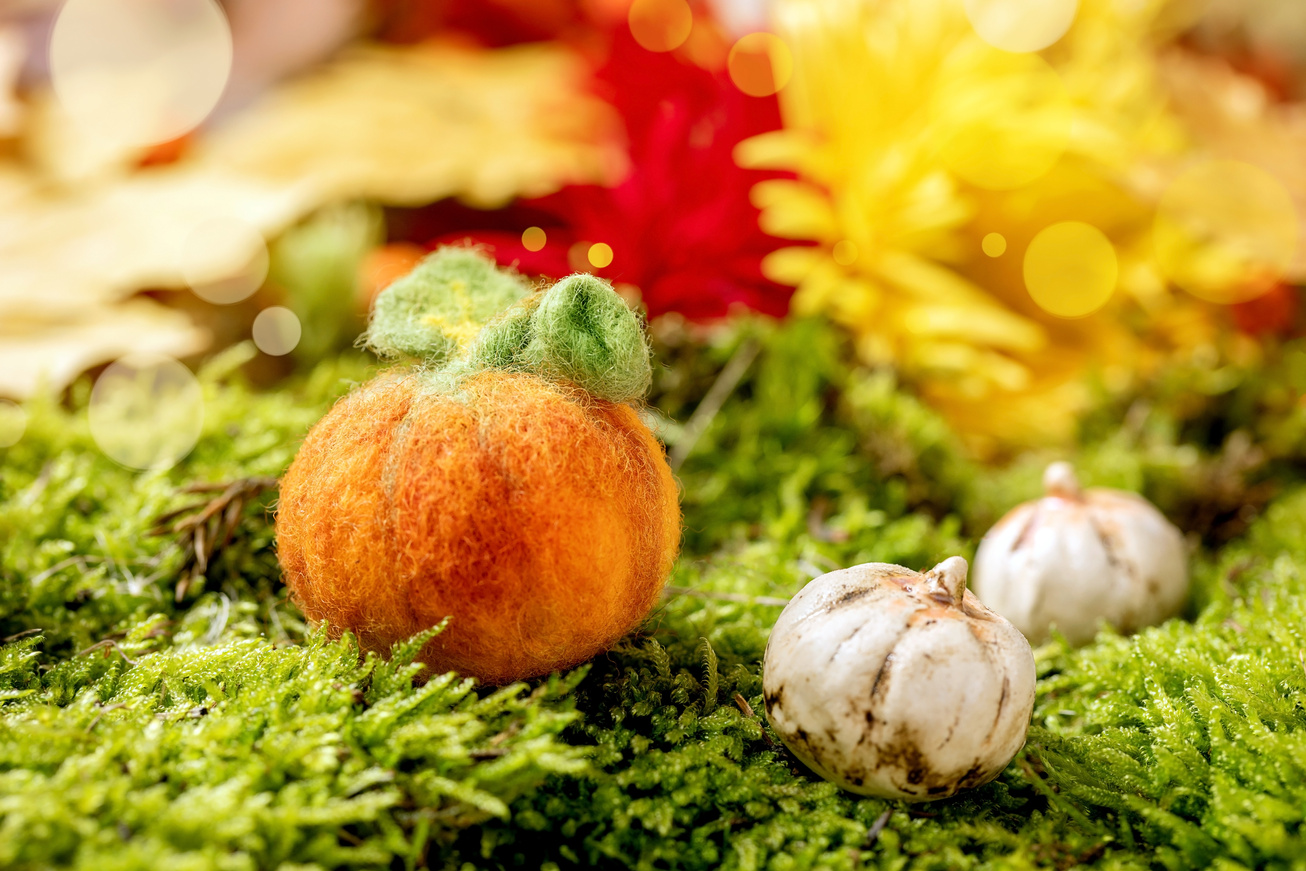
You will need: wool roving in autumn shades (orange, yellow, red, brown), warm soapy water, a felting needle (optional), and a scrap of green wool for the stem.
Roll a small amount of wool into a loose ball.
Dip it into warm, soapy water and gently roll it between your hands, adding pressure to firm it up.
Continue shaping until it forms a pumpkin shape. Add extra wool as needed for ridges.
Shape a small green wool stem and attach at the top. Let dry on a towel.
Autumn Leaf Garland
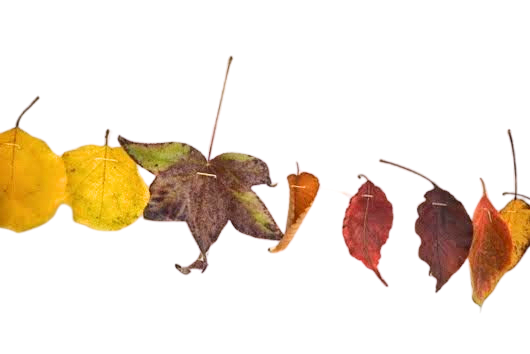
You will need: fallen autumn leaves (pressed for a day or two), natural twine or yarn, a needle or hole punch, and optional beeswax for preservation.
If desired, dip leaves in melted beeswax and let them dry on parchment paper to preserve.
Use a hole punch or needle to make small holes in the leaves near the stem.
Tie or thread leaves onto twine, alternating for a balanced look.
Continue until the garland reaches your desired length, then hang across a window, mantel, or nature table.
Cardboard Sword
You will need: a sheet of stiff cardboard, a craft knife (for adult use), a hot glue gun, gold and silver paint, a strip of leather or felt for the grip, and a length of ribbon.
Draw a sword about as long as the child’s arm: a straight blade, a simple cross-guard, a short handle, and a round pommel.
Cut two identical shapes and glue them together for stiffness.
Paint the blade silver and the hilt gold, and let it dry.
Wrap the handle tightly with the felt or leather strip, gluing as you go.
Tie a small ribbon at the cross-guard. Bless the sword with a verse before it goes on the quest.
Circle Verses and Songs
The Farmer Poem. Add movement based on the words: stamp feet, gallop, dig, pull up roots, stack.
A farmer awoke at the break of day,
He got on his horse and he galloped away,
He galloped away, he galloped away,
He got on his horse and he galloped away.
Oh, come all you farmers, Oh come, said he,
Our carrots and turnips for to see,
In the warm earth, they have grown so big,
We must bring our tools and dig and dig,
So fetch your spades and come along,
To dig up the roots with your arms so strong,
To lay them out in the sun to dry,
Then pile them up in the cart so high!
Autumn Comes (song).
Autumn comes, the summer is past,
Winter will come too soon.
Stars will shine clearer, skies seem nearer,
Under the harvest moon.
Come my Sisters, Come my Brothers (circle dance). Holding hands in a circle, walk in and raise arms on the first line, walk back on the second, turn slightly and move to the left for the next two, then repeat to the right.
Come my sisters, come my brothers,
at the sounding of the drum,
From the mountains, from the hilltops,
harvest in the autumn sun.
Golden shines our father sun,
silver shines our mother moon,
Come my sisters, come my brothers,
Harvest in the autumn sun.
A Michaelmas verse, after Rudolf Steiner.
Strong, stronger be in soul,
O man of earth, become.
For round you the ringing,
The Word of the Spirit, sounds:
Be brave, be brave, be brave.
Brave and True. Traditional, public domain, widely sung in English Waldorf schools.
Brave and true will I be,
Each good deed sets me free,
Each kind word makes me strong,
I will fight for the right,
I will conquer the wrong.
A short evening verse for the festival.
The stars send down their iron light,
Michael guards us through the night,
Courage in our hearts shall stand,
Like a sword in a steady hand.
Group Activity: The Harvest Mandala
On festival day, collect harvested foods from the kitchen, or non-perishable goods you intend to donate, and arrange them as a beautiful mandala on the grass or a large cloth. Start with a special object in the centre (a large pumpkin, a loaf of bread, a basket of apples). Build outward in concentric rings, using repeating patterns of colours and shapes. Stand back together when it is finished. Take a photograph. If the food is for donation, carry it from the mandala straight to the local food pantry or charity.
This activity holds the spirit of Michaelmas in a single image: gratitude, beauty, courage, and service woven together.
Materials List
Pantry
Bread flour, dried yeast, honey, olive oil, salt, raisins, one egg
Butter, brown sugar, eggs, vanilla, cinnamon, nutmeg, cloves, apples, milk (for apple cakes)
Onion, carrot, parsnip, squash, potato, stock, butter, cream (for soup)
Apples, nuts, a honey cake if you wish
Nature table
Red and gold cloths, a beeswax candle, sunflowers, apples, a small Michael or knight figure, a clay or felt dragon
Autumn leaves, cones, berries, acorns, felted pumpkins from the craft above
Crafts
High-quality paper or cardstock, wax or block crayons, watercolour paints and brushes
Pressed autumn leaves, glue, twine, darning needle
Walnut shell halves, small felt scraps, embroidery thread, strong glue, a fine marker
Wool roving in autumn shades, a felting needle (optional), green wool for stems
Stiff cardboard, craft knife, hot glue, gold and silver paint, felt or leather strip, ribbon (for sword)
Beeswax for leaf preservation (optional)
For the day
A paper or felt dragon to hide for the quest
A basket for the treasure (apples, nuts, beeswax stars)
A bonfire or single candle for the evening
Foods for the harvest mandala (your kitchen or tins for donation)
Adapting for Different Ages
For the youngest (ages 3 to 6)
Keep everything gentle and sensory. The dragon is not slain; he is sent to sleep, or he becomes a friend. Skip the play. Let the little one knead a small roll of dragon bread of their own, hide a soft felt dragon under a cushion for them to find, and sing one short verse together. A simple wool ball that becomes a pumpkin, a few leaves gathered for the mandala, the smell of bread and the glow of a beeswax candle. This is the festival at this age, and it is enough.
Grades 1 to 3
The story can carry a little more now. Tell the Princess and the Dragon, or Saint George, in full, perhaps by candlelight with simple props on the table. Children of this age love the sword, the quest, the moment of courage, and they will want to act the story out in their play afterwards, sometimes for days. The dragon hunt is the heart of their festival day. Walnut shell mice, a painted autumn tree, and helping to build the harvest mandala all suit this age beautifully. There is no need yet to talk about inner dragons, the picture is doing the work.
Grades 4 to 8
Now the deeper meaning of the festival can begin to come forward, gently. Around the meal, you might invite each person to name one small dragon they would like to face this year, a habit, a fear, a difficult subject at school. Older children can take real responsibility in the preparations: baking the bread from start to finish, leading the singing, writing their own Michael verse, planning a dish for the meal. They can also be wonderful guides for the younger ones through the crafts and the mandala, carrying the festival forward with real care.
A Note for the Parent
Your first Michaelmas will most likely feel a little wobbly, and that is perfectly right. The dragon bread may come out lopsided. Someone will cry over a sword that bent. The verse you meant to learn by heart will be read, half-remembered, from your phone. None of this matters. What the children will hold, long after the details blur, is that on a particular cold-bright day in autumn, the kitchen smelled of bread, a candle was lit, a story was told, and the grown-ups in their lives stood up together to meet the turning of the year.
That is the festival. The polish comes later, year by year. Begin small, begin warm, and trust the season to do half the work for you.
About This Guide
This guide was written in collaboration with Sophie, co-founder of Starpath Learning and a Waldorf teacher, homeschool mentor, and curriculum developer. The Autumn story, circle verses, and many of the artistic and hands-on activities come from her original Seasonal Celebration Toolkit.
Further Reading
Cooper, Fynes-Clinton and Rowling, The Children’s Year (Hawthorn Press)
Carey and Large, Festivals, Family and Food (Hawthorn Press)
Druitt, Fynes-Clinton and Rowling, All Year Round (Hawthorn Press)
Rudolf Steiner, The Michael Mystery and Anthroposophical Leading Thoughts (1924); Cosmic and Human Metamorphoses (1917)