

Welcome to the Essential Guide for teaching the Science: Nature Studies (Our Natural World) block.
Whether you are exploring Waldorf education for the first time or actively preparing to homeschool your First Grader, this guide provides a complete blueprint of the philosophy, goals, and daily structure you need to introduce foundational science through observation and imagination.
The Philosophy: Science without Textbooks
In a modern, traditional classroom, a six-year-old might be handed a diagram of the water cycle or a plastic model of a plant. In the Waldorf approach, we believe that before a child can dissect nature into abstract parts, they must first fall in love with it.
In Grade 1, Science is not about memorizing facts; it is about reverence, observation, and connection. We teach the child to notice the world by experiencing the four elements (Air, Fire, Earth, and Water) and the changing of the seasons through their own senses.
By shifting the focus from "information" to "experience", children achieve several critical developmental milestones:
Observation Skills: Learning to look closely at a single leaf or track the direction of the wind.
Emotional Connection: Fostering a sense of stewardship and love for the environment.
Imaginative Empathy: Using guided visualization to imaginatively "become" a seed, a bird, or a drop of water.
The Curriculum: What You Will Teach
This deeply grounding block is designed to take roughly 16 instructional days. Here is a transparent look at the exact concepts and goals you must cover.
Your Learning Intentions:
Experience and understand the four classical elements: Earth, Air, Fire, Water.
Explore local flora and fauna through daily outdoor excursions.
Observe the daily rhythms of the sun, moon, and weather.
Express scientific observations artistically in the Main Lesson Book.
The Waldorf Method: How to Structure a Daily Lesson
To successfully teach Nature Studies, you must weave together indoor imagination with outdoor reality. Here is exactly how to introduce the Element of Air.
Step 1: The Imaginative Visualization
Rather than a fairy tale, we use a guided meditation to allow the child to "become" the element we are studying. You will need to write short, immersive visualizations for every topic.
Example Story Snippet (The Feather and the Wind):
Close your eyes. Take a long, slow breath in... and out. Now imagine... You are a soft little feather, nestled cosily on the forest floor. You are light… so very light. But then — a whisper. A breeze, soft and curious, brushes past. It tickles the edge of your feather.
You float gently above the forest floor, twirling slowly in the air. The wind holds you like a careful hand. You hear it too: in the rustle of leaves, in the swish of the tall grass. The wind is always moving, even when you can't see it.
Step 2: The Outdoor Excursion
Take the indoor imagination outside and verify it with the senses.
Example Exploration Activity:
The Wind Walk: Go outside to a space exposed to the breeze. Can we feel the wind on our skin? Can we see anything moving because of the wind (trees, leaves, flags)? Blow feathers, tissue paper, or bubbles and watch how they move.
Step 3: Drawing in the Main Lesson Book
Return indoors to capture the feeling of the element in color.
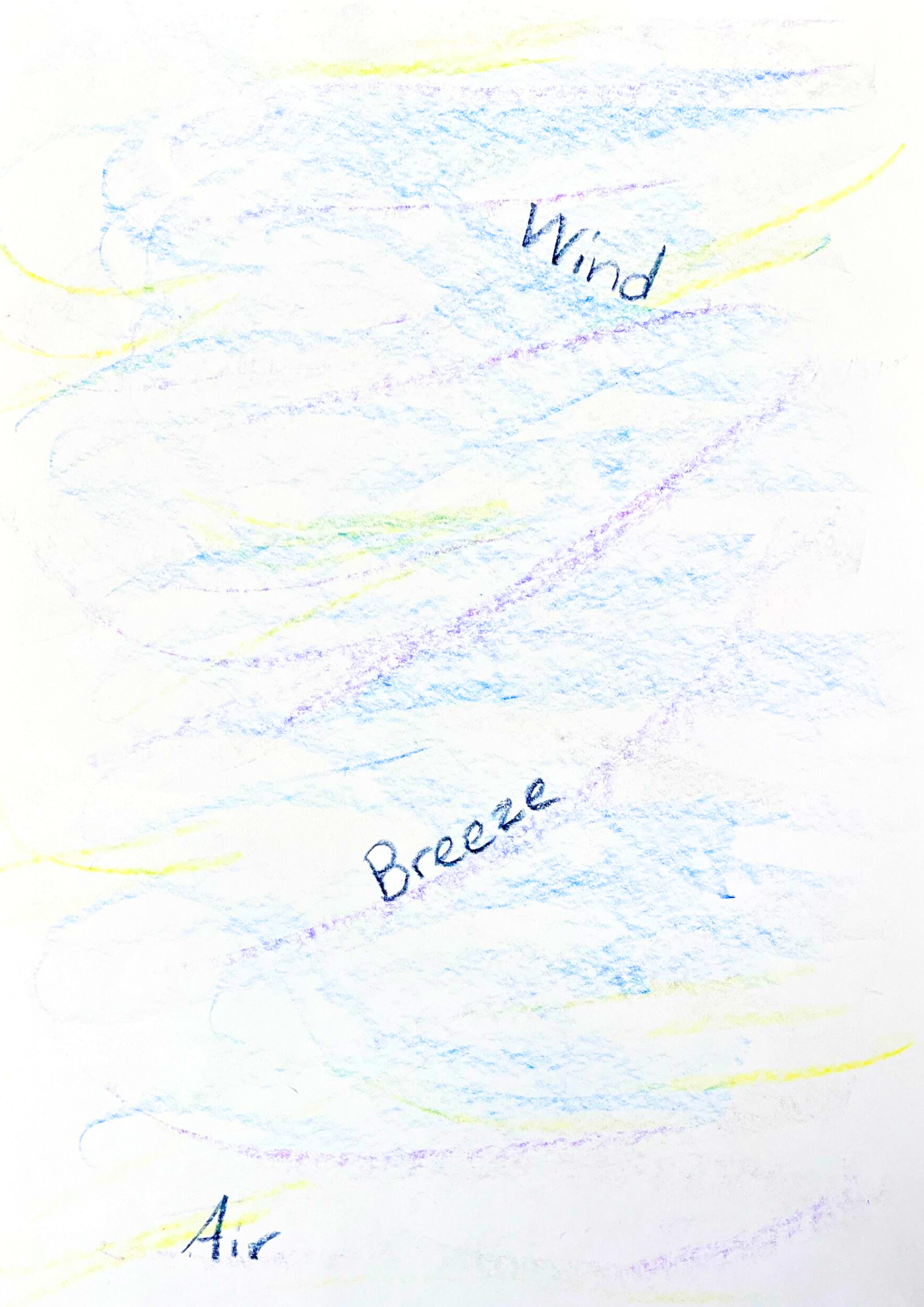
Example Drawing Instructions:
The Title Page: Open a brand new Main Lesson Book. Draw a natural scene that your child sees often outside their own window.
The Air Page: Use block and stick crayons to create abstract swirls, light lines, and airy spaces to capture what the wind looks and feels like.
Build It Yourself vs. The Guided Curriculum
You now have the exact blueprint to teach Nature Studies. If you have the time, you can absolutely use this guide to map out the 16-day progression, write the daily visualizations for water, fire, earth, and animal life, and invent engaging outdoor excursions.
But for many homeschooling parents, planning three weeks of daily scientific storytelling and engaging outdoor activities takes immense time and creative energy.
If you want to focus entirely on exploring nature with your child rather than planning your evenings away, the complete Nature Studies: Our Natural World block is ready for you.
What’s inside the complete Block?
When you purchase the full block, all the heavy lifting is done for you. You instantly unlock:
16 Guided Visualizations and Stories: Word-for-word scripts to bring the elements and the changing seasons to life.
16 Guided Excursions and Activities: From building terrariums to tracking the moon, every activity is planned out for you.
Step-by-Step Main Lesson Book Drawings: With detailed instructions and reference images for every scientific concept.
Daily Morning Circle: Complete beanbag passing games, rhythmic counting, and nature-themed poetry.
Everything is carefully structured to give you the confidence of an experienced Waldorf teacher, right out of the box.